The Dating App Gets Paid When the Date Fails
Dating now runs through an app paid by the month. Match and Bumble collected $4,551 million in 2024 and counted no couples.
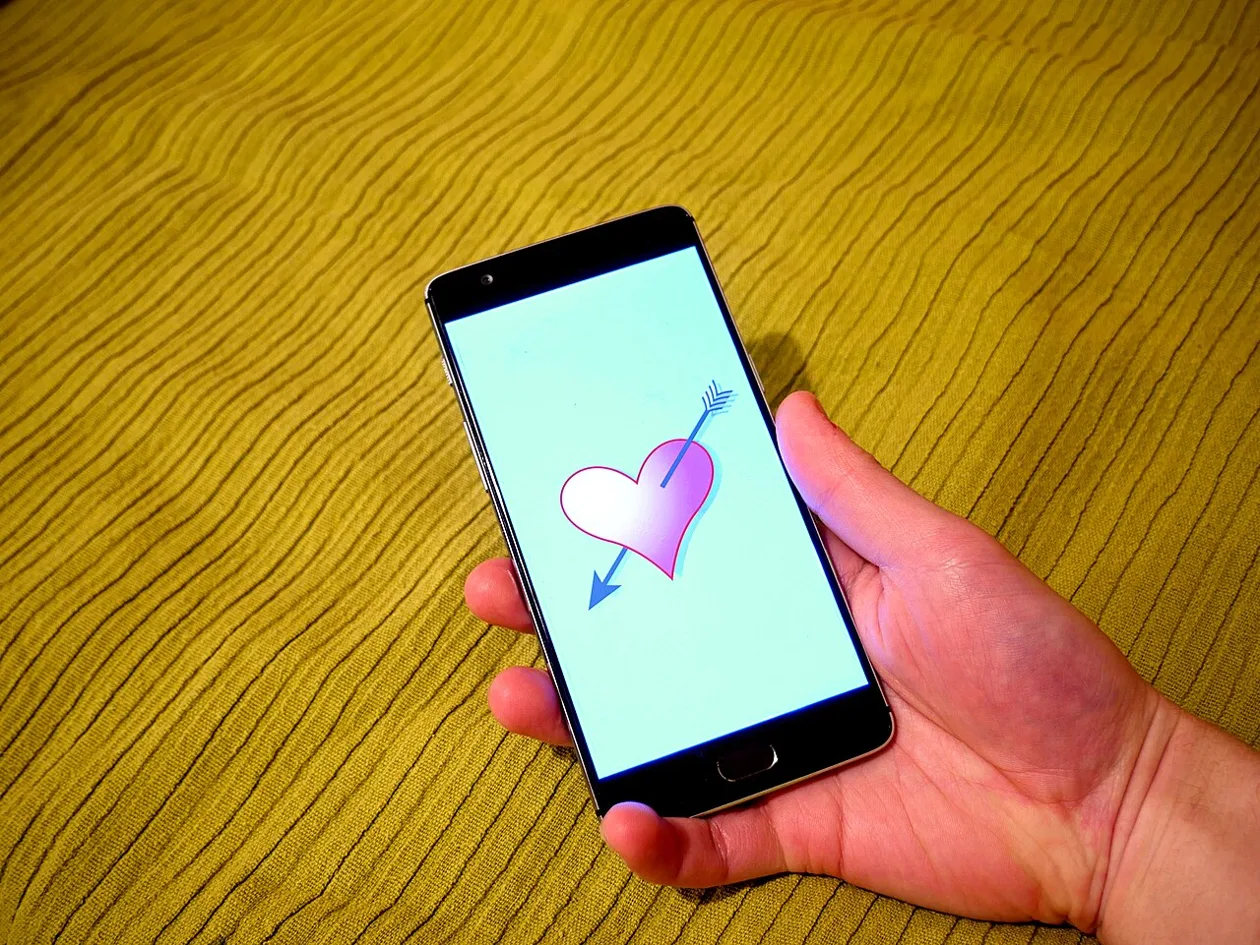
The dating app isn't paid to end your search — a dating app gets paid by the month, out of the search itself, so a customer who finds somebody and deletes the app walks off as revenue the company just lost.
At my table, a good night ended with somebody changing his mind, and then the table folded up under my arm and went home with me. Nobody paid me by the month to keep arguing. A dating run as a subscription flips the table: the search pays monthly, and a finished search pays nothing.
The apps widened the door past a hometown, a workplace, and one circle of friends
Before the apps, a person's dating pool ran through geography and luck: coworkers, classmates, friends of friends. Pew Research Center counts three in ten U.S. adults as having used a dating site or app, and 53 percent of adults under 30. Meeting online now sits inside normal life: one in ten partnered adults met a current spouse or partner on a site or app, Pew counts, and among partnered adults under 30 the share runs to one in five.
The widening matters most where the old pool ran shallowest. Pew counts 51 percent of lesbian, gay and bisexual adults as having used a dating platform, against 28 percent of straight adults, and partnered LGB adults met a current partner online at 24 percent, against 9 percent for straight partnered adults. In a small town, or a minority community spread thin across a map, the app builds a market where the old world offered a handful of names or none. The price lands, too: premium costs less than one dinner out, and the free tier costs nothing. Hinge, a Match Group brand, states its aim plainly — an app built for deletion, built to move a user into a relationship and off the platform. Grant the wider door first. Argue about the meter second.
Both companies tell investors that payers fund the business, and a payer in a relationship stops paying
Where does the money come from? Match Group tells the SEC that revenue comes from recurring subscriptions and from à la carte features sold one at a time, Tinder's Boosts and Super Likes among them. Bumble tells the SEC that a subset of users pays for subscriptions and in-app purchases under a freemium model. What happens when a payer finds a relationship and deletes the app? The payment stops, and Match Group's risk section lists users finding meaningful relationships and leaving as a reason a user base shrinks. What do the companies report every quarter? Payer counts and revenue per payer. And what does any filing report about couples formed? Nothing. No line, no count, no column.
The app isn't a matchmaker with a pricing problem. The app's a subscription with a dating problem, and the meter runs on loneliness, billed monthly. Every extra month on the meter delays the shared lease, the wedding fund, and the house two people might buy together.
Match Group and Bumble collected $4,551 million in 2024, and neither 10-K reports one couple formed
Match Group's Form 10-K for fiscal 2024 reports total revenue of $3,479 million, with direct revenue of $3,418 million from users paying subscriptions and à la carte features. Match counts 14.9 million payers for 2024, down 5 percent from 15.6 million a year earlier. Tinder's payers fell 7 percent to 9.7 million, while revenue per payer climbed 8 percent to $19.12. Fewer payers, more from each: a shrinking pool can still feed a business.
Bumble's Form 10-K for fiscal 2024 reports total revenue of $1,071.6 million, Bumble App revenue of $866.3 million, and 2.8 million Bumble App paying users. Add the two lines and the pair collected $4,551 million, nearly all of it from people paying to keep searching. Now look for the outcome the ads sell. Match Group's 10-K never uses the word couples at all. Bumble's 10-K uses the word once, about the industry, and reports no count of couples formed. Both filings count payers to the decimal. Neither counts a couple. A business measures the thing a business gets paid for.
The apps gave people with tiny local pools an honest market, and my side underrates that gain
Access. The apps really did widen the door, and real couples fill Pew's one-in-ten figure in the millions. For a gay kid in a small town, or anybody whose whole world held twelve eligible people, the app delivered the first honest market that person ever got — a pool with real depth, open at midnight, free at the door. My side talks about the meter and skips the door. Granted, in full: the door widened, and the widening changed lives for the better.
My test for every dating idea is the country test, and the test asks two questions. Does a system work for the country, across the whole map? And can a 26-year-old build a life under the system — including a shared one, a partner, a lease two names hold? A dating run as a subscription passes the first question halfway: the door genuinely widened. The second question fails on the filings' own arithmetic: a company paid by the month out of the search earns nothing from the ending everybody claims to want.
Sources
- Match Group, Inc., Form 10-K for the fiscal year ended December 31, 2024 (SEC EDGAR, accession 0000891103-25-000027) — opened in full: total revenue $3,479,373 thousand; direct revenue $3,417,978 thousand, primarily recurring subscriptions with à la carte features (Tinder's Super Likes and Boosts named as pay-per-use features) to a lesser extent; payers 14,898 thousand, down 5 percent from 15,602 thousand; Tinder payers 9,696 thousand, down 7 percent; revenue per payer $19.12, up 8 percent; Item 1A risk factor on failing to retain users or convert users to paying users, naming users who find meaningful relationships and no longer need the products as a cause of user-base decline; the word "couples" does not appear in the filing. https://www.sec.gov/Archives/edgar/data/891103/000089110325000027/mtch-20241231.htm
- Bumble Inc., Form 10-K for the fiscal year ended December 31, 2024 (SEC EDGAR, accession 0000950170-25-030151) — opened in full: total revenue $1,071,643 thousand; Bumble App revenue $866.3 million; Bumble App Paying Users 2,807.3 thousand and Total Paying Users 4,149.3 thousand (monthly averages for the year); freemium model — the service is free and a subset of users pays for subscriptions or in-app purchases to access premium features; the word "couples" appears once, in a general description of online dating, with no count of couples formed. https://www.sec.gov/Archives/edgar/data/1830043/000095017025030151/bmbl-20241231.htm
- Pew Research Center, "The who, where and why of online dating in the U.S." (February 2, 2023) — opened in full: three in ten U.S. adults have ever used a dating site or app, unchanged from 2019; 53 percent of adults ages 18 to 29; 51 percent of LGB adults against 28 percent of straight adults; one in ten partnered adults met a current spouse or partner on a dating site or app, one in five among partnered adults under 30, and 24 percent among partnered LGB adults against 9 percent among straight partnered adults; survey of 6,034 U.S. adults conducted July 5–17, 2022. Colour and steelman support only — not the receipt. https://www.pewresearch.org/internet/2023/02/02/the-who-where-and-why-of-online-dating-in-the-u-s/

 Next in this issue · Hollywood"Dune: Part Three" Takes "Departures" From the Book, Its Stars Say — Six Weeks Before It Opens →
Get the alert when it breaks.
DRAFTWhen a story breaks on a beat you pick, we email or text you. When there's an emergency in your ZIP, we text you. Nothing else, and no ads in any of it.
Check your inbox — and your phone.
Staging preview: those confirmations went to the desk's outbox, not to you. Nothing was sent.
DRAFT The signup wording, in full — for approval
Confirm your Mother Lode alerts
You asked The Mother Lode for alerts at this address. One click confirms it:
{confirm_url}
What you signed up for: breaking-news emails for {beats}; emergency emails for ZIP {zip}.
Alerts start only if you click. Didn't ask for this? Ignore the email — the signup dies on its own.
The Mother Lode — three editions a day, no ads.
The Mother Lode: reply YES to confirm alert texts — breaking news for {beats}, emergencies for ZIP {zip}. Msg frequency varies. Msg&data rates may apply. STOP to end, HELP for help.
You're in. Mother Lode alert texts are live for {beats} + ZIP {zip} emergencies. Reply STOP to end anytime.
Confirmed — you're on the list. The next story that breaks on your beats lands in this inbox.
You're already on the alert list. Nothing changed, and no new confirmation was sent.
{headline} — The Mother Lode
Mother Lode — {beat}: {headline} {url} STOP to end
EMERGENCY — Mother Lode: {headline}. Official resources: {url} STOP to end
Alerts need somewhere to go — add an email, a mobile number, or both.
That email looks incomplete — check it and try again.
That number looks incomplete — ten digits, area code first.
ZIP code is five digits.
Pick at least one beat, or add your ZIP for emergency alerts — one of the two has to be set.
THE MOTHER LODE — Edition Nº 004 · Morning, staging preview. Photos are real, licensed and credited on the page; designed cards carry figures from the article itself. Staging only — not the production edition.