A Tour "Grossed $100 Million." That Number Counts Tickets Only — and Only the Shows Anyone Reported
The biggest money number in music is added up from forms that venues and promoters choose to send in — or don't. Free tickets don't count, T-shirts don't count, and the biggest tour of all time isn't on the official chart at all. Here is how the counting actually works, in plain English.
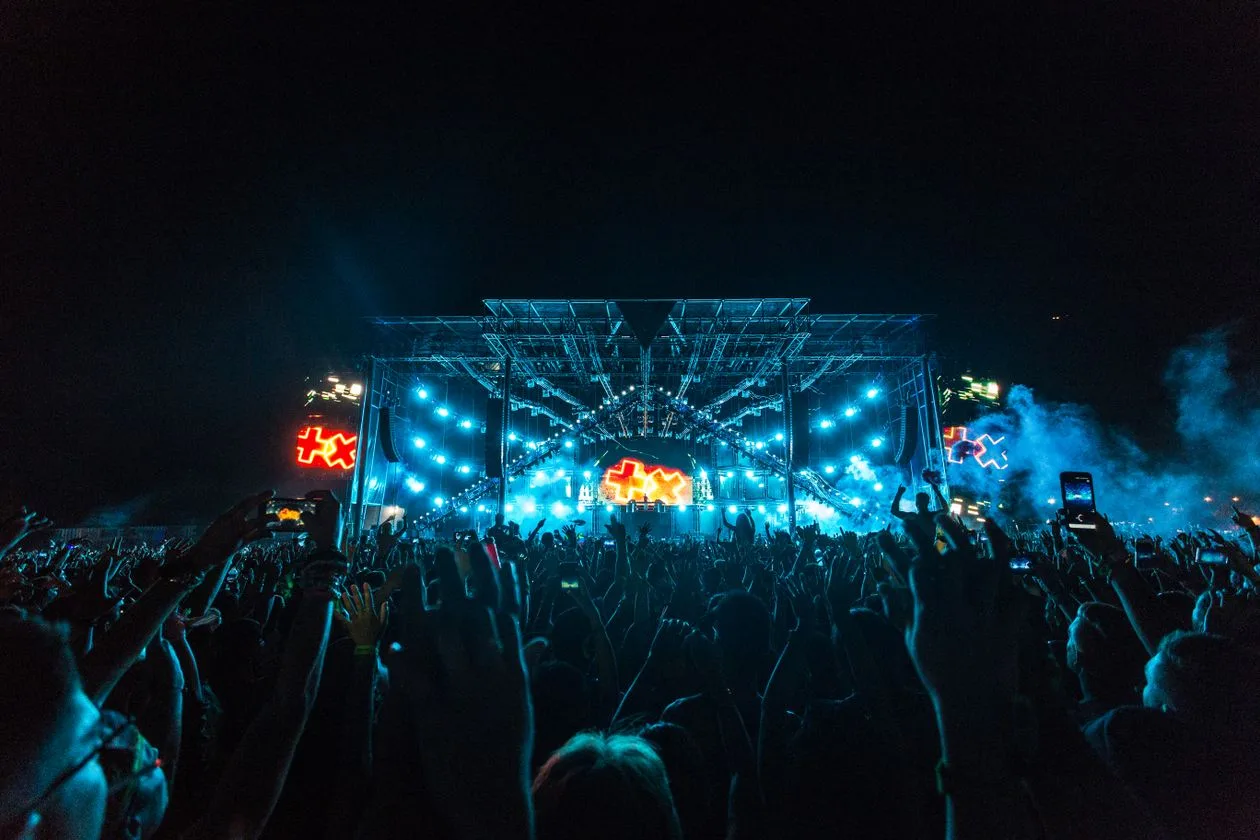
Every few months, a headline announces that a tour has "grossed" some enormous number — $100 million, $400 million, a billion. The number sounds like a bank statement. It isn't one. It's a scorecard, filled in by hand, by the people who ran the shows, under rules loose enough that the biggest tour in history simply isn't on the official list.
This isn't a scandal. It's just how the counting works — and once you know the rules, you can read every one of those headlines properly.
Who does the counting
Two publications keep the score. Pollstar, the concert industry's own magazine, has collected concert money figures since the 1980s. Billboard runs the rival scorecard, called Boxscore. Both work the same basic way: after a concert, somebody connected to the show — the venue, the promoter who booked it, the artist's manager or agent — sends in the numbers. How many tickets were sold, how much money they brought in.
Nobody has to send anything. Sending is voluntary, always has been, and Billboard says so in its own coverage, in so many words: some artists, venues and promoters choose to keep their numbers to themselves. Hold that thought. It's the whole story.
What a "gross" actually counts
Pollstar publishes its reporting rules openly, and they're more particular than the headlines suggest:
- Only ticket money. The total is the money from tickets sold. Taxes are left out. The extra booking and venue fees piled on at checkout are left out too.
- Only paid tickets. A ticket given away free doesn't count as sold — and neither do the seats a production holds back for cameras, staging and guests. The "tickets sold" line means people who paid.
- Only seats that were really for sale. The size of the crowd is measured against the seats actually put on sale for that show, not the building's biggest possible capacity. A "sellout" means every seat they chose to sell, sold.
- Prices are the printed prices, in the local currency, converted to dollars later.
- Festivals count as festivals. A festival's numbers must come from the festival's own promoter, and no single act on the bill gets credit for the festival's total. One weekend in the desert is one number, not a hundred artists' numbers.
And one rule that explains a lot about the chart's reliability: if a number is wrong, only the people who sent it in can fix it — and Pollstar states plainly that it isn't responsible for numbers that were reported wrong. The scorekeeper publishes what it's handed.
Why the total is always smaller than the tour
Five things a tour gross never counts, even when the reporting is perfect:
- Merchandise. The T-shirts, hoodies and posters are a separate business entirely. When Pollstar put the Eras Tour's 2023 ticket total at an estimated $1.04 billion, it estimated the merch separately — around $200 million more, on top, not inside.
- Everything else sold on the night. Food, drink, parking, sponsorships — none of it's ticket money, so none of it's in the number.
- The shows nobody reported. A tour's published total is the sum of the shows that were sent in. Quiet shows, soft shows, shows the team would rather not publicise — if the form never arrives, the show adds zero, whatever it actually took.
- Late shows. Reports trickle in for months. Pollstar's own rules warn that numbers sent in late land in the archives, and a pile of late reports arriving near a chart deadline risks missing the chart altogether. The year-end list is a snapshot of what had arrived in time.
- Costs. The gross is the money in, before a single bill is paid — before the trucks, the crew, the staging, the venue's cut. It's the size of the wave, not what anyone got to keep.
The biggest tour ever is an estimate. The official chart says so.
Here's the system working exactly as designed, at the largest possible scale. Taylor Swift's team never sent in the Eras Tour's numbers — not to Billboard, not to anyone. So Billboard's Boxscore chart, which only prints what it's given, carried on without the biggest tour on Earth: no entry, and no place on its year-end lists.
Pollstar played it the other way. It took the reports it did have, added the ticket prices in each city, the known sizes of the stadiums, and what similar tours had done, and published an estimate: $1,039,263,762 for 60 shows in 2023 — about $17.3 million a night, from roughly 4.3 million tickets at an average of about $239 each. To feel that number: it's a sold-out stadium's worth of people, every night, for eight months. Pollstar labelled it an estimate in its own headline story, in the first paragraph. The estimate is honest. What isn't honest is the retelling — the thousand headlines that repeated the figure as if it had been counted.
People who book concerts for a living treat all of this the way you'd expect: as a starting point, not proof. It's an open secret among buyers — practice, not a rule anyone publishes — that good shows are more likely to be reported than disappointing ones: the sellout gets sent in, the half-empty night often doesn't. Nobody can measure how big that tilt is. Everybody in the business prices it in anyway.
How to read the next headline
Three questions, every time. Tickets only? (Yes — always; anything else is a different number wearing this one's clothes.) Counted or estimated? (If the artist's team reports, it's counted; if the name is big enough to make headlines without reporting, check which word the story uses.) All the shows, or the ones that arrived in time? (Almost always the second.)
The number is real. It's just narrower than it sounds — a count of paid tickets, from the shows someone chose to report, taken before any costs. Read it that way and it tells you something true: how many people paid, and roughly what they paid to be there. Which, for a fan, is the part that was ever interesting anyway.
Sources
- Pollstar, "Box Office Reporting Policy" (pages.pollstar.com) — the primary source for the counting rules: ticketed public events only, free events not eligible; tickets sold means paid tickets only (free tickets and production holds excluded); capacity means seats actually available for sale; the total is ticket money with taxes and outlet/venue fees left out; prices at face value in local currency, converted at the month's rate; reports suggested weekly, older reports go to archive and quarterly charts, late bulk submissions near a deadline risk missing the charts; published data can only be corrected by the promoter, venue or original reporter; "Pollstar is not responsible for misreported data"; festival figures must come from the festival promoter directly and no individual act receives credit for them. https://pages.pollstar.com/box-office-reporting-policy — opened in full Nov. 5, 2026. [PRIMARY]
- Billboard, via its syndicated Eras Tour analysis (SocastSRM relay of Billboard, Nov. 29, 2023) — Billboard's own statement of its method: all Boxscore rankings rest on figures reported to Billboard by artist managers and agents, promoters and venue executives; "reporting has always been voluntary, and some artists, venues and promoters opt to withhold data"; the Eras Tour's representatives had reported nothing, which "disqualifies her from appearing on year-end Boxscore charts," so Billboard estimated instead. https://radiox.cms.socastsrm.com/2023/11/29/taylor-swifts-eras-tour-on-track-to-become-highest-grossing-global-tour-in-history/ — opened in full Nov. 5, 2026. [RELAY of Billboard — billboard.com does not open in our environment; labelled here and consistent with the library's standing practice]
- Pollstar News, "Taylor Swift Sets All-Time Touring Record With $1 Billion Gross" (Dec. 16, 2023) — Pollstar's own account of its estimate: $1,039,263,762 for the Nov. 17, 2022–Nov. 15, 2023 chart year, 60 shows, ~4.3 million tickets, average ticket $238.95, average show $17,321,063, built from "Pollstar Boxoffice reports combined with extensive research including ticket prices in each market, record capacities at each venue and comparable tour data"; merchandise estimated separately at roughly $200 million (per-head estimate in the $40 range). https://news.pollstar.com/2023/12/16/taylor-swift-sets-all-time-touring-record-with-billion-dollar-gross/ — opened in full Nov. 5, 2026. [PRIMARY for Pollstar's estimate method]
- TSE Entertainment, "Will They Actually Sell Tickets?" — a working talent-buying agency's account of how buyers use these figures: voluntary, self-reported systems with no obligation to report; a reported gross is top-line money before expenses; buyers treat a reported figure as a floor to cross-check, and commonly assume strong shows are reported more readily than weak ones while noting the size of that tilt is hard to measure. Quoted in the text as trade practice, not as a rule. https://tseentertainment.com/will-they-actually-sell-tickets-how-to-read-an-acts-real-drawing-power-before-you-book/ — opened in full Nov. 5, 2026. [PRACTICE source, labelled]

 Next in this issue · OpinionThe Dating App Gets Paid When the Date Fails →
Get the alert when it breaks.
DRAFTWhen a story breaks on a beat you pick, we email or text you. When there's an emergency in your ZIP, we text you. Nothing else, and no ads in any of it.
Check your inbox — and your phone.
Staging preview: those confirmations went to the desk's outbox, not to you. Nothing was sent.
DRAFT The signup wording, in full — for approval
Confirm your Mother Lode alerts
You asked The Mother Lode for alerts at this address. One click confirms it:
{confirm_url}
What you signed up for: breaking-news emails for {beats}; emergency emails for ZIP {zip}.
Alerts start only if you click. Didn't ask for this? Ignore the email — the signup dies on its own.
The Mother Lode — three editions a day, no ads.
The Mother Lode: reply YES to confirm alert texts — breaking news for {beats}, emergencies for ZIP {zip}. Msg frequency varies. Msg&data rates may apply. STOP to end, HELP for help.
You're in. Mother Lode alert texts are live for {beats} + ZIP {zip} emergencies. Reply STOP to end anytime.
Confirmed — you're on the list. The next story that breaks on your beats lands in this inbox.
You're already on the alert list. Nothing changed, and no new confirmation was sent.
{headline} — The Mother Lode
Mother Lode — {beat}: {headline} {url} STOP to end
EMERGENCY — Mother Lode: {headline}. Official resources: {url} STOP to end
Alerts need somewhere to go — add an email, a mobile number, or both.
That email looks incomplete — check it and try again.
That number looks incomplete — ten digits, area code first.
ZIP code is five digits.
Pick at least one beat, or add your ZIP for emergency alerts — one of the two has to be set.
THE MOTHER LODE — Edition Nº 004 · Morning, staging preview. Photos are real, licensed and credited on the page; designed cards carry figures from the article itself. Staging only — not the production edition.